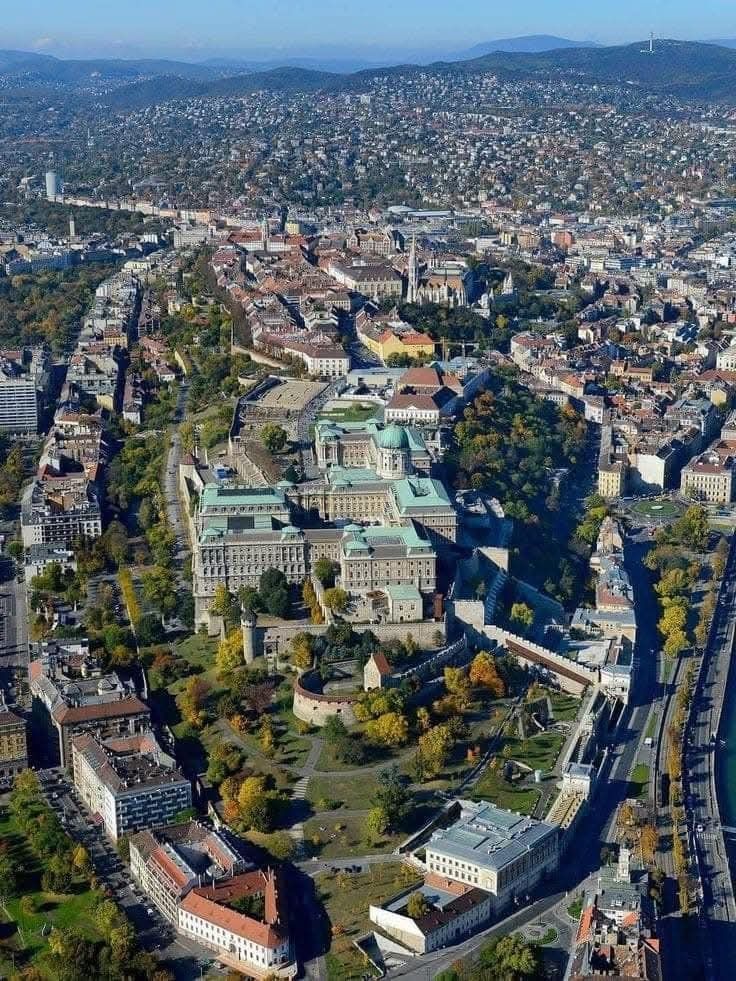
The Buda Castle District is a UNESCO World Heritage site and the cultural heart of the capital. It is important to understand that this area is not just a single castle building, but a “city within the city.” In the Middle Ages, this was the center of the country. Within its historic walls lived not only kings but also citizens, merchants, and craftsmen. Many of the houses you see today are built on foundations that are 600–700 years old, preserving the atmosphere of the Medieval Quarter.
Walking through the cobblestone streets, you will find the Matthias Church and the fairytale-like Fisherman’s Bastion, which offers the most famous panorama of the Hungarian Parliament. One of the most striking symbols you will encounter is the Turul Bird. This giant bronze statue near the Royal Palace represents the mythical bird of prey from Hungarian legends. According to mythology, the Turul guided the Hungarian tribes to their homeland and remains a powerful symbol of national identity.
Fun Fact – The Secret Labyrinth: Did you know that there is an entire underground world beneath your feet? Castle Hill has a natural cave system more than 10 kilometers long. During World War II, it was used as an air-raid shelter, and it even houses the Hospital in the Rock (Sziklakórház), a secret emergency hospital and nuclear bunker built directly into the stone.
Pro Tip: If you want to reach the district in style, take the Buda Castle Hill Funicular (Sikló) from Clark Ádám Square. It has been carrying passengers up the hill since 1870!
Spend a day here with your friends!
 Explore this vibrant city through my student eyes. From iconic landmarks like the Parliament to the best cozy study spots and transportation. I’ll help you find your way in the heart of Hungary.
Leave a Reply